
Wash Less, Wear More: Keeping Activewear Looking Sharp
Technical fabrics have a dirty secret that has nothing to do with sweat. The garments that wick moisture, stretch in four directions, and hold their shape through a hundred washes are also the garments most likely to smell like a locker room five minutes after a warm-up. The cause is structural: polyester and nylon are oil-loving surfaces, and human skin oils cling to them far more stubbornly than they cling to cotton. A single wash cycle rarely lifts all of it. What remains gets baked in by the dryer, and the next workout reactivates it.
The standard advice, wash after every wear, is the wrong instinct dressed up as hygiene. It wears out the elastic, fades the dyes, and sheds microfibers at a rate that should make anyone who owns a washing machine uneasy. A more useful habit runs the other direction: wash less often, wash more deliberately, and let air and time do most of the work between sessions.
Why the Care Label Is a Minimum, Not a Rule
Most activewear carries a small tag with a temperature and a symbol, and most people read it as an instruction to wash after every use. It is closer to a ceiling. The label tells a person what the fabric can survive, not what it requires. A pair of running shorts that spent forty minutes on a cool morning and then hung on a hook has not accumulated enough soil to justify a full cycle. A sports bra worn under a shirt on a commute and removed before any real exertion has barely met the fabric.
The distinction matters because every wash is a small act of attrition. Elastane, the stretch component in most leggings and tops, degrades with heat, agitation, and detergent. The fibers that give a waistband its snap and a shoulder its recovery are the first to go. Wash a pair of leggings thirty times in a season and the fabric will tell the story: thin at the seat, slack at the knee, a waistband that has stopped gripping. Wash them ten times and hang them to air in between, and the same garment holds its line for years.
The Air-Dry Interval Between Sessions
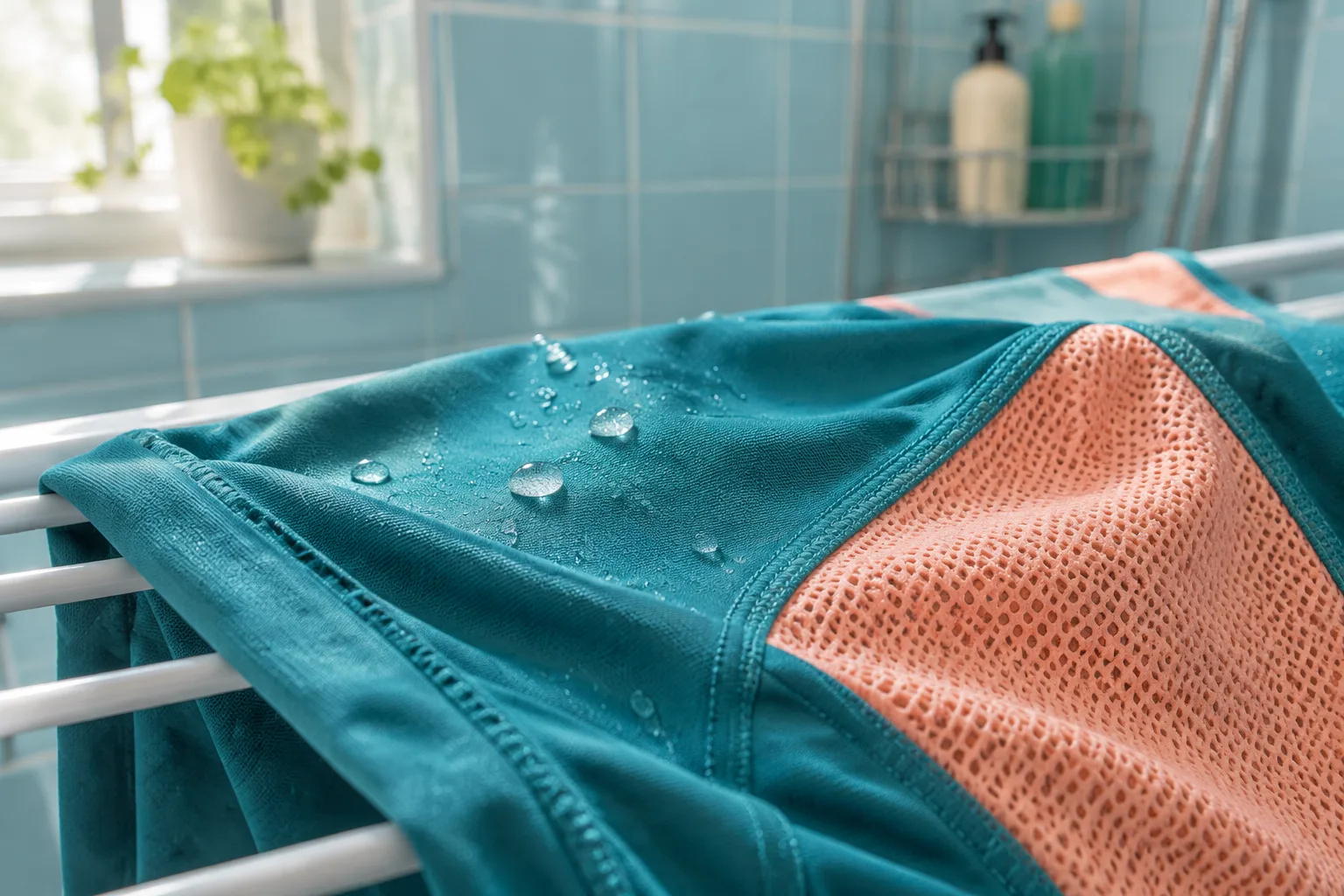
The single most effective habit costs nothing and takes no equipment. After a workout, the garment goes on a hanger or over the back of a chair in moving air, not into a hamper. A hamper is a sealed humid chamber where bacteria multiply on the residual oils and moisture. A hanger in a breezy room dries the fabric in under an hour, and the smell that would have set into the fibers never gets the chance.
Two garments can rotate through a week this way. Wear one, air it, wear the other, air it. By the third or fourth session, the fabric has had enough passive drying that a wash is genuinely due rather than reflexively performed. The nose is a reliable gauge here: a quick sniff at the armpit seam and the crotch tells the truth faster than any schedule. If it smells neutral, it is neutral. If it smells like last Tuesday, it needs a wash.
Sunlight helps. Ultraviolet light is a mild disinfectant, and a few hours on a line or a balcony rail does more for odor than a short rinse cycle. The caveat is color: strong sun fades black leggings and bright tops over time, so the line is better for darker pieces and the shade is better for anything with a dye worth protecting.
Turning the Garment Inside Out Changes Everything
When a wash does happen, the orientation of the garment inside the drum matters more than most people realize. Skin oils, salts, and dead skin cells accumulate on the inner face, the side that touched the body. Turning the piece inside out puts that face against the water and the detergent rather than against the outer shell. It also protects the outer surface from abrasion against other garments, which is what dulls prints and pills the smooth face of a synthetic knit.
Zippers closed, hooks fastened, drawstrings tucked. A loose zipper pull acts like a tiny saw against everything it touches in a mixed load. Bras with hooks go into a mesh bag, not because the bag cleans them better but because it keeps the hooks from snagging the delicate knit of a neighboring top. These are small courtesies paid to fabric that has to last.
Cold Water, Low Spin, and the Case Against Fabric Softener
Hot water is the enemy of stretch. It relaxes the elastane, accelerates dye loss, and encourages the very fibers that give a garment its shape to fatigue. Cold water cleans activewear perfectly well, provided the detergent is formulated for synthetics and the load is not overloaded. A crowded drum means less agitation per garment and more friction between them, which is the mechanical wear that no detergent can undo.
Fabric softener deserves a specific warning. The coating that makes cotton towels feel plush deposits a waxy film on synthetic fibers and blocks the microscopic channels that let moisture escape. A softener-treated athletic shirt stops wicking. It also traps odor compounds against the fiber instead of letting them rinse away. The same goes for dryer sheets. Skip both, and the fabric keeps its function.
A low spin speed matters for the same reason. High-speed extraction wrings the fabric hard, and repeated wringing is what stretches a neckline out of shape. A gentler spin leaves the garment damp but structurally intact, and the line or a flat rack finishes the job.
The Dryer Is Where Activewear Goes to Die
Heat is the single largest cause of premature activewear failure, and the dryer concentrates it. Tumble drying at high heat shrinks the elastane, sets wrinkles into synthetic knits, and accelerates the pilling that makes a favorite top look tired. The lint trap fills with the fibers the garment can no longer spare. Every cycle in a hot dryer shortens the useful life of the piece by a measurable margin.
Air drying is the default. A flat rack for knits that could stretch under their own weight, a hanger for tops, a line for anything sturdy. If a dryer is unavoidable, the lowest heat setting and a shorter cycle, with the garment pulled out while still slightly damp, keeps the damage to a minimum. The piece finishes drying on the rack in minutes.
The Vinegar Rinse and the Odor That Won't Leave
Some garments reach a point where a normal wash no longer clears the smell. The oils have bonded to the fiber, and detergent alone cannot lift them. A diluted white vinegar soak, roughly a cup in a basin of cool water, for half an hour before a regular wash, breaks down the residue and restores the fabric's ability to rinse clean. The vinegar smell fades completely once the garment dries. Baking soda in the wash drum does similar work for milder cases.
This is a rescue measure, not a routine. A garment that needs a vinegar soak every week is a garment that is being worn too many times between washes or washed in water that is too cool to release the oils. The soak buys time. It does not replace the basic habit of washing when the fabric has genuinely earned it.
What "Clean" Actually Means for a Synthetic Knit
The instinct to equate "worn once" with "dirty" comes from cotton, where a single wear leaves visible soil and a distinct smell. Synthetics behave differently. A polyester shirt worn for a light session and aired properly can go two or three wears before it needs a wash. A cotton tee cannot. Treating the two fabrics the same way means over-washing the synthetic and under-washing nothing.
The better question is not how many wears but what kind. A heavy sweat session in humid weather earns a wash. A cool-weather walk, a stretch session on a mat, a commute layered under a jacket: these leave far less residue. A person who tracks the intensity rather than the count will wash the right pieces at the right time and leave the rest on the hanger.
The Long Game: Fewer Washes, Longer Life
The math is unglamorous but real. A pair of quality leggings washed after every wear might survive a year of regular use before the waistband slackens and the knees bag. The same pair, washed every third wear and air-dried in between, can last three or four years. The savings are not just the replacement cost. They are the small daily pleasure of a garment that still fits the way it did on the first day.
There is an environmental ledger too. Every wash cycle sends microfibers into the water supply, and synthetic activewear is among the worst offenders. Washing less often is the simplest reduction available, requiring no new appliance and no change in wardrobe. The garment that stays on the hanger instead of in the drum sheds nothing.
The habit that emerges from all of this is almost aggressively modest. Air the piece. Turn it inside out when it finally goes in. Cold water, low spin, no softener, no hot dryer. A vinegar soak when the nose says the fabric has gone past saving. None of it is complicated, and none of it requires buying anything. The activewear in the drawer already knows how to last. The job is to stop interrupting it.