
The Loud Shoe Math: Is a Statement Sneaker Worth It?
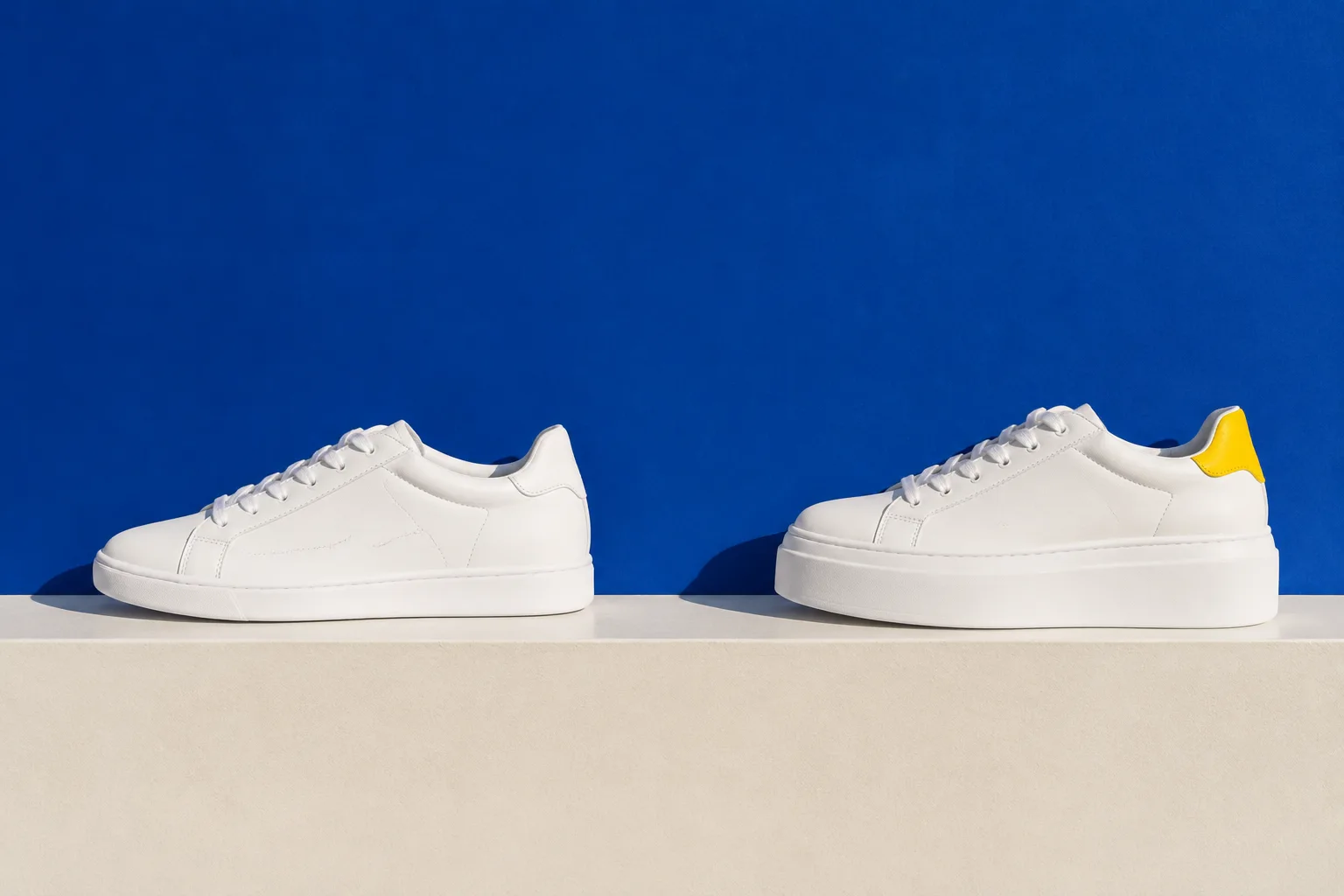
The shoe sits on a shelf like a dare. It is white, mostly, with a sole thick enough to double as a doorstop and a heel tab the color of a school bus. The price tag reads $170. Behind it, a near-identical white sneaker with a slightly thinner sole reads $65. The difference between them, to the naked eye, is about four ounces of rubber and a logo small enough to cover with a thumb.
That gap, roughly $105, is the entire question. Statement sneakers have become the default footwear of the past decade, and their price range has stretched from the reasonable to the absurd. The honest way to think about whether any single pair is worth it is to do the loud shoe math: what is actually being bought, what is actually being worn, and what part of the price survives the first scuff.
What the Extra Money Actually Buys
Start with materials. A standard mass-market sneaker uses a synthetic upper, an EVA foam midsole, and a rubber outsole glued in place. It is cheap to make because every component is cheap to make. A statement shoe from a design-led label often swaps in full-grain leather, a denser foam, a stitched rather than glued sole, and a lining that does not feel like a plastic bag against the foot.
Those swaps cost real money. Leather uppers run several times the cost of synthetic mesh. Stitched construction takes time on a machine that a glue press does not. A heavier foam with better rebound costs more per sheet. None of that is marketing; it shows up in the hand.
Then there is the part that has nothing to do with the shoe: the design. The proportions of a statement sneaker are deliberate. The sole is thicker because someone decided the silhouette needed weight at the bottom. The paneling is placed to break up the foot rather than just cover it. That design labor, and the small runs it implies, is a genuine cost. A factory making 200,000 pairs of a generic white trainer can amortize a designer's fee into pennies. A label making 4,000 pairs cannot.
So the $105 gap is not fraud. Roughly half of it is materials and construction. The other half is design, scarcity, and the brand's name printed somewhere small.
The Part of the Price That Never Reaches the Foot
Here is where the math gets uncomfortable. A significant share of a statement sneaker's price is not for the shoe at all. It is for the feeling of owning it, the recognition in a room, the small charge of being seen. That charge is real, and it is worth paying for some people. But it depreciates faster than any material.
Consider the lifecycle. The first three months, the shoe is loud and new and does its job. Months four through twelve, it is a familiar part of a rotation. After a year, if it is a well-made leather sneaker, it has creased across the toe box and darkened at the heel, and it looks like a shoe someone has worn. The recognition value is gone. What remains is the construction.
This is the central asymmetry of loud shoes. The premium for design and status is paid upfront and consumed quickly. The premium for materials and construction is paid upfront and consumed slowly, over years. A buyer who pays $170 for the status and gets a glued synthetic shoe has bought something that will look tired in eight months and fall apart in two years. A buyer who pays $170 for leather and stitching has bought something that will look broken-in in eight months and hold together for five.
The price tag does not tell a person which of those two they are getting. Only the construction does.
The Rotation Problem
There is a quieter cost that rarely makes it into the comparison: a loud shoe cannot be worn every day. A white statement sneaker with a chunky sole is a look. Worn with the same jeans three days running, it stops being a statement and starts being a uniform. The shoe's usefulness is capped by its own visibility.
That cap matters for the math. A $170 statement sneaker worn twice a week for two years delivers about 200 wears, or roughly 85 cents per wear. A $65 plain sneaker worn five days a week for two years delivers about 500 wears, or 13 cents per wear. The expensive shoe can cost six times more per wearing even when it lasts longer, because it cannot be worn as often.
This is not an argument against owning one. It is an argument against pretending the loud shoe replaces the quiet one. The person who buys a single statement pair and expects it to be the whole rotation has done the math wrong before leaving the store.
Where the Money Is Genuinely Wasted
Some statement sneakers are worth the premium and some are a tax on enthusiasm. The dividing line is rarely the brand. It is whether the money went into the object or into the campaign.
A shoe is likely a poor buy when the upper is synthetic but the price is designer, when the sole is glued but the marketing talks about craft, when the colorway is the entire proposition. Limited-edition drops built on a generic blank are the clearest example: the buyer pays for the color and the scarcity, and the shoe underneath is the same $30 construction as a supermarket trainer.
A shoe is likely a fair buy when the leather is full-grain and the sole is stitched, when the last is shaped for an actual foot rather than a photograph, when the brand has been making the same silhouette for years and has had time to fix its mistakes. Longevity in a product line is a signal. A silhouette that has survived a decade has survived because people keep wearing it after the novelty fades.
The Fit Tax Nobody Budgets For
There is a practical cost that hits statement sneakers harder than plain ones: fit. A chunky sole raises the heel and changes the angle of the foot inside the shoe. A thick leather upper takes weeks to break in and will not stretch where the stitching runs. A designer last shaped for a narrow foot will pinch a wide one no matter how much the shoe cost.
The result is that a meaningful number of expensive sneakers sit in closets because they never became comfortable. That is the worst outcome in the math: full price paid, zero wears delivered. A $65 shoe that fits is worth more than a $200 shoe that does not, and the price tag offers no protection against this.
The only defense is to try the shoe on late in the day, when the foot is at its largest, and to walk on a hard floor rather than carpet. A statement sneaker that pinches in the store will pinch worse after an hour of standing.
The Resale Floor Under Loud Shoes
One factor does soften the math for certain pairs: resale. Some statement sneakers hold value in a way plain ones never do. A collaboration or a discontinued colorway can sell used for a meaningful fraction of its original price, and occasionally for more. That floor changes the risk calculation. A buyer who pays $200 for a pair that can be resold for $120 has effectively paid $80 to wear it for a year, which is a different proposition from a $200 pair that is worth nothing the moment it leaves the box.
This is not a reason to buy sneakers as an investment. Most do not appreciate, and the ones that do are unpredictable. It is a reason to check the secondary market before paying full price. A pair that trades well used is a pair with an exit, and an exit is worth something.
The Shoe That Earns Its Price
The statement sneaker that justifies its cost is usually not the loudest one on the shelf. It is the one with a full-grain upper, a stitched sole, a last that fits, and a silhouette old enough to have been refined. It costs more than a generic trainer because it is more shoe, and it can be worn often enough that the per-wear number comes down.
The loudest shoe in the store, the one with the bus-yellow heel tab and the price tag like a dare, is often the one that earns the least. It sells a feeling that lasts a season and a construction that lasts a year. The math on it is simple once the feeling fades: the buyer paid for the first three months and got a shoe for the rest.
A person standing in the store with $170 in hand can decide which of those two they are looking at by turning the shoe over. If the sole is stitched, the leather is real, and the shape has been around long enough to have a history, the price is buying something that will still be on a foot in five years. If the sole is glued and the story is the color, the price is buying a season. Both are legitimate purchases. Only one of them is shoe math.