

The In-Between Layer: Activewear for Uncertain Days
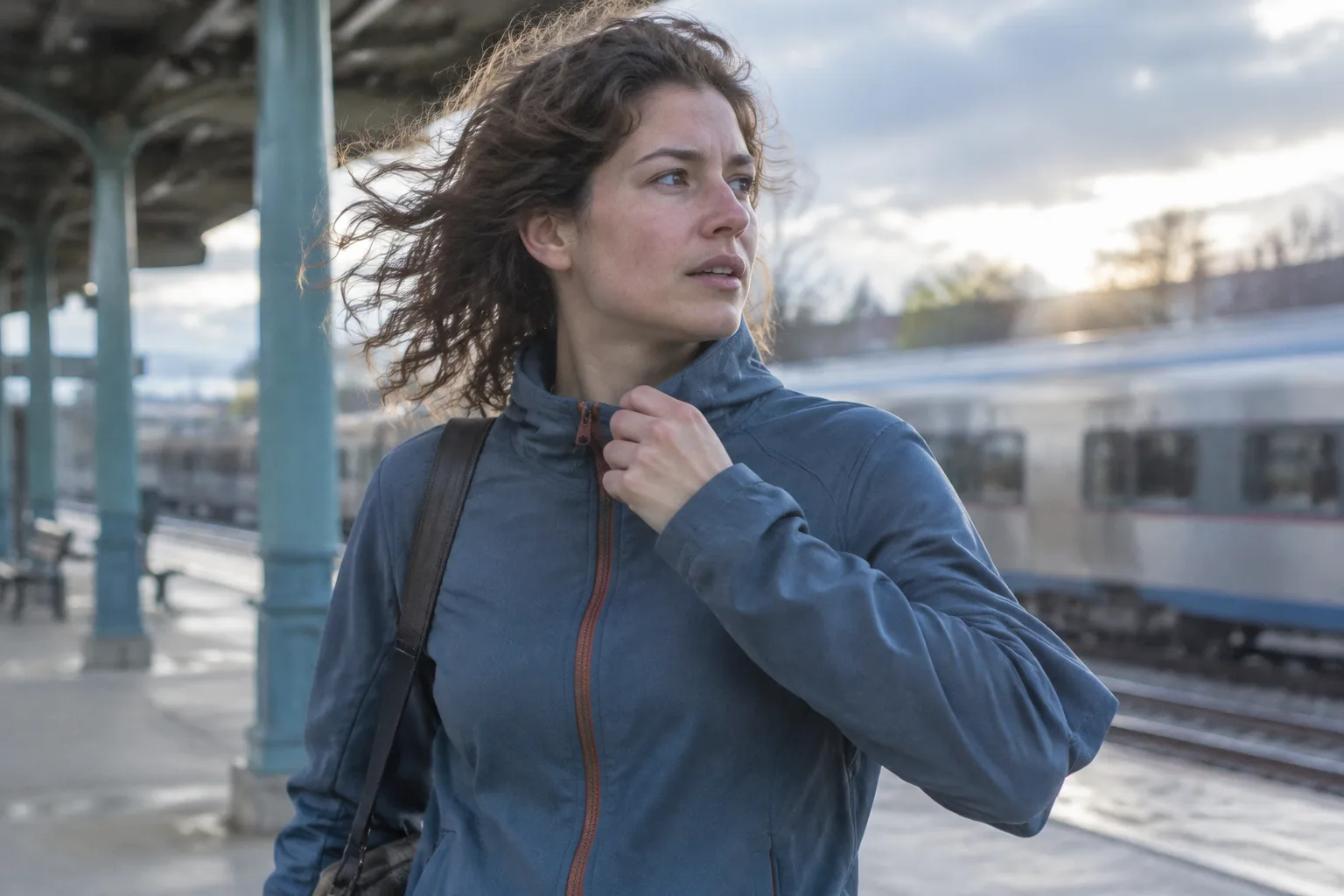
The forecast said 58 degrees and sunny, which is the kind of number that means nothing until a person is standing on a platform at 7:40 in the morning with a wind coming off the tracks. By noon the same jacket that felt flimsy is a trap. By six it is cold again. Activewear built for that day, the day that refuses to commit, occupies a narrow and mostly unglamorous category: not the gear for a marathon, not the gear for the couch, but the layer for the hours in between.
Most athletic clothing is designed for a performance envelope. It assumes heat, or it assumes cold, or it assumes a defined effort with a defined end. The in-between day has no such envelope. It has a commute, a desk, a walk at lunch, a cold evening, and a temperature swing of twenty degrees across it. The clothes that survive that day are a different species.
The problem with performance fabric on a mild day
A technical running shirt has one job: move sweat off skin fast. That job is excellent when the body is actually producing heat. On a mild day with light activity, the same fabric can feel clammy and thin, and it reads as gym clothes in a way that is hard to shake. Thin polyester has a sheen to it. It catches light at the shoulder. In a meeting, that sheen does a lot of quiet damage.
Heavy fleece fails at the other end. A thick brushed-back layer is comfortable for the first cold hour and unbearable by mid-morning, and it does not pack into a bag without taking up real space. The swing is the enemy. A garment that only works in one temperature is the wrong garment for a day that has five.
The in-between layer needs to breathe at one end and hold a little warmth at the other, and it needs to look like clothing rather than equipment. Those three requirements pull against each other.
What the useful pieces have in common
Three things show up again and again in pieces that actually earn their place on a variable day. First, a fabric with some weight to it but no bulk: a mid-weight knit, a stretch woven, a brushed jersey that drapes instead of clinging. Second, a cut that can pass as ordinary clothing. Third, a design that layers flat, so it fits under a jacket in the cold morning and over a t-shirt by afternoon without changing the silhouette.
The weight question is the one most people get wrong. A fabric can be light and still have body. A good mid-weight jersey at maybe 200 to 260 grams per square meter holds its shape, hides the lines of whatever is underneath, and provides a real buffer against a breeze. That is the sweet spot. Anything lighter is a warm-weather shirt. Anything heavier starts to feel like outerwear.
Stretch woven pants occupy the same logic. A four-way stretch fabric with a matte finish and a straight or tapered leg can handle a walk, a train seat, and a desk chair without the swish and sheen of a track pant. The matte finish is the detail that decides whether the pant reads as casual clothing or as gym kit, and it is almost always a function of the weave rather than the fiber.
The quarter-zip and why it keeps returning
The quarter-zip pullover is the most repeated answer to the in-between day, and the reason is mechanical. The zip is a vent. Closed at the neck in the cold morning, it traps warmth where it matters. Opened at the chest by noon, it dumps heat without requiring the wearer to take anything off. No other single piece of activewear offers that range in one garment.
The version that works is not the shiny performance one with a logo across the chest. It is the one in a mid-weight knit, with a zip that runs smoothly, a collar that stands up on its own, and cuffs that hold. A collar that flops is a collar that does nothing. A zip that sticks is a garment that gets left in the drawer after the second wear.
There is a small detail worth watching: the depth of the zip. A zip that stops at the sternum gives a vent. A zip that stops too high gives almost nothing, and one that runs nearly to the waist becomes a different garment entirely. The sternum-length zip is the one that does the work.
Layering order for a day that changes its mind
The practical sequence for a variable day runs in three thin pieces rather than one thick one. A base layer in a light merino or a smooth synthetic blend sits against the skin. A mid layer in a mid-weight knit sits over it. A shell or a light jacket goes on top for the cold edges of the day and comes off by mid-morning.
Merino earns its place in the base layer for one reason: it handles a wide temperature band without feeling either clammy or stifling, and it resists odor across a long day. The tradeoff is durability and price. A fine-gauge merino tee costs more than a synthetic one and wears faster at the underarm and the collar. For a commuter who wears it two or three times a week, that trade is usually worth it. For someone who needs a shirt that survives a washing machine on hot, it is not.
The mid layer does the visible work. This is the piece people see when the jacket comes off, so it has to look intentional. A plain crew or a quarter-zip in a muted color, with a clean hem and a collar that holds, reads as clothing. A bright color-blocked piece reads as a warm-up, which is fine on a run and strange in a coffee shop.
The shell should be the lightest thing in the stack. A packable wind layer that folds into its own pocket and weighs almost nothing is the right tool. It handles the cold morning, the breeze, and the light rain, and then it disappears into a bag for the rest of the day. A heavy shell defeats the purpose of the whole system.
The pocket problem
Activewear has a pocket problem that becomes obvious on the in-between day. Performance pieces often have one small zip pocket, sized for a key or a gel, positioned where a hand cannot comfortably rest. The in-between day involves waiting, walking, standing, and sitting, and it involves carrying a phone and a wallet and keys, not a gel.
A hand pocket that actually fits a hand is the detail that separates a piece built for daily wear from one built for a workout. So is a pocket that sits at hip height rather than at the chest. The chest zip pocket on a quarter-zip is useful for a card, but it is not a substitute for real pockets, and the pieces that understand this tend to be the ones that stay in rotation.
Shoes and the transition problem
The shoe decision on a variable day is a small version of the same problem. A running shoe with a thick foam midsole and a bright mesh upper is built for effort. A leather sneaker or a knit slip-on with a modest sole is built for the rest of the day. The in-between answer is a low-profile sneaker with a matte upper and a sole that can handle a mile of walking without feeling like a mattress.
The knit slip-on has become the default for this reason. It handles a walk, it slips off at a desk, and it looks unremarkable in a way that is exactly the point. The tradeoff is support, which is minimal, and weather resistance, which is close to zero. On a wet day, a different shoe is required.
The color and finish rule that keeps things wearable
There is a rule that governs whether an in-between piece gets worn or sits in a drawer: matte finish, muted color, no visible branding at scale. A small logo is fine. A large one turns a piece into a uniform. A shiny fabric turns a piece into gym kit. A bright color turns a piece into a statement that has to be matched, which is a burden on a morning when the only goal is getting out the door.
The colors that survive are the ones that read as clothing rather than as sport: charcoal, navy, olive, a warm grey, a deep burgundy. These colors hide sweat better than pale ones and pair with everything already in a closet. That is a practical advantage, not an aesthetic one.
What the in-between layer is actually for
The in-between layer exists for the hours that do not have a category. The walk to the station before the sun is up. The lunch break that turns into a twenty-minute stroll. The evening that arrives colder than the afternoon promised. These hours are not athletic and they are not sedentary, and they are the hours most clothing is not designed for.
The pieces that serve them are unremarkable on the hanger and indispensable in the wearing. A mid-weight quarter-zip that vents. A stretch woven pant with a matte face. A packable shell that folds into a pocket. A merino base that handles the range. None of these pieces will win a design award. All of them will get worn more than the technical gear sitting next to them in the closet.
On a day that starts at 58 and ends at 41, the difference between a good day and a bad one is often a single layer that can be opened, closed, or removed without disrupting anything underneath. A small zip at the sternum does more for comfort across eight hours than a whole drawer of performance fabric. The in-between layer is the one that gets the zip right and the sheen off, and then gets out of the way.