
Light Jackets for Weather That Wavers
Light jackets occupy a strange slot in the wardrobe: too substantial to be ignored, too thin to be trusted. A cotton bomber that feels perfect at 8 a.m. turns into a sweat trap by noon. A packable windbreaker that shrugs off a drizzle becomes a sauna the moment the sun breaks through. The garment has to survive a day that cannot decide what it is, and most jackets are built for one weather, not three.
The problem is not that light jackets are badly made. It is that weather between roughly 50 and 70 degrees Fahrenheit is a moving target, and most jackets are designed for a still photograph. The day starts cold, warms by lunch, cools again at dusk, and throws in a shower or a gust for good measure. A jacket that only handles one of those conditions spends the rest of the day either on a chair or wrapped around the waist.
What follows is a working guide to the category, organized around the conditions that actually break a light jacket: temperature swing, wind, rain, packability, and the small matter of whether it looks like clothing rather than equipment.
The Temperature Swing Is the Real Enemy
A jacket worn from a 52-degree morning into a 68-degree afternoon needs to release heat without being taken off. That single requirement eliminates a surprising number of options. Anything with a sealed lining, a heavy shell, or a tight weave will trap warmth and turn a pleasant walk into a mild endurance event.
The garments that handle swing well share a quality: they breathe. Unlined cotton, lightweight nylon with visible mesh, thin wool, and softshells with pit vents all let trapped heat escape before it becomes uncomfortable. The test is simple and low-tech. Hold the fabric up to a lamp. If light passes through the weave, air will too.
Layering matters more than the jacket itself. A light jacket over a t-shirt handles a wider range than the same jacket over a sweater, because the wearer can shed the inner layer without losing the outer one. The jacket becomes a shell for the day rather than a fixed commitment.
Wind Changes What a Jacket Needs to Do
A 60-degree day with still air feels mild. The same day with a 15 mph wind feels like a different season. Wind strips the thin layer of warm air that skin maintains, and a light jacket that ignores this will feel useless on a bridge, a pier, or any open street corner.
Wind resistance and breathability pull against each other. A fully windproof shell blocks gusts but traps moisture; a fully breathable knit lets wind straight through. The compromise most jackets strike is a tight weave with some mechanical stretch, which blocks most wind while still venting body heat. Softshells live in this space, and so do tightly woven cotton-nylon blends.
A hood helps more than expected. Even a thin, unstructured hood cuts wind on the neck and ears, which is where a light jacket's weakness shows first. When a jacket has no hood, a collar that stands up and closes at the throat does nearly the same job.
Rain Is Where Light Jackets Usually Fail
Most light jackets claim water resistance and deliver a brief shrug before soaking through. The honest ones use a durable water repellent finish on a woven shell, which sheds a light shower for twenty minutes or so and then wets out. That is fine for a dash to the car and useless for a walk across town.
For genuine rain, the options narrow to a proper shell: a laminated membrane, taped seams, and a hood that can be cinched. These jackets are less breathable, which is the trade. The wearer stays dry from the outside and slightly damp from the inside, which is a better outcome than being soaked through.
The middle ground is a coated nylon or polyester shell with a mesh lining. It handles steady rain for a while and breathes better than a membrane, and it packs smaller. For a climate where rain arrives in short bursts rather than all-day storms, this is often the right call.
Packability Decides Whether the Jacket Comes Along
The best light jacket in the world is useless if it stays home because it will not fit in a bag. Packability is not a luxury feature; it is the quality that determines whether the garment gets worn at all on a day that might turn.
A jacket that stuffs into its own pocket, roughly the size of a grapefruit, disappears into a tote or a backpack and reappears when the sky darkens. Unlined nylon shells pack smallest. Thin wool and cotton do not compress nearly as well and tend to crease, though a quick shake usually settles them.
There is a real cost to chasing the smallest packed size. The thinnest packable shells feel like plastic bags, rustle with every step, and offer almost no structure. A slightly heavier jacket that packs to the size of a small melon often wears far better and still fits in most bags. The trade is worth it for anyone who plans to wear the jacket rather than merely carry it.
The Fit Question Nobody Settles
A light jacket should fit close enough to block wind at the hem and cuffs but loose enough to layer a thin sweater underneath. Most jackets are cut for one or the other, and the wearer discovers which too late.
The sleeves are the tell. If the cuffs ride up when the arms are raised, the jacket is too short in the sleeve and will let cold air in at the wrist. If the shoulders pull when the arms cross, the jacket is too tight across the back and will feel restrictive all day. A good light jacket allows a full range of motion without billowing.
Length matters more than most shoppers expect. A jacket that stops at the hip covers the waistband and keeps the lower back warm, which is where cold air finds its way in. Cropped styles look sharp but leave a gap between jacket and trousers that a gust will exploit.
Materials That Earn Their Place
Cotton canvas and twill are the workhorses. They breathe, they soften with wear, and they handle a light shower once broken in. They are heavy relative to nylon and slow to dry, which limits them to dry, mild days.
Nylon and polyester shells are the packable specialists. They shed wind and light rain, dry fast, and weigh almost nothing. The better versions use a ripstop weave and a matte finish so they look like clothing rather than a tarp.
Wool, especially a thin merino or a wool-nylon blend, is the underrated option. It regulates temperature across a wider range than any synthetic, resists odor, and looks good with almost anything. It is not waterproof and it costs more, but for a jacket worn indoors and out on a wavering day, it may be the most versatile choice in the category.
Softshells, usually a polyester weave bonded to a thin fleece backer, split the difference. They block wind, resist light rain, and stretch with the body. They are warmer than a plain shell, which makes them ideal for the cooler end of the range and less useful once the afternoon warms.
What the Jacket Looks Like at the End of the Day
The final test is not technical. It is whether the jacket looks like something a person would wear on purpose when the weather finally settles. A shell with too many zippers and logos reads as gear, which is fine on a trail and slightly absurd at a dinner table.
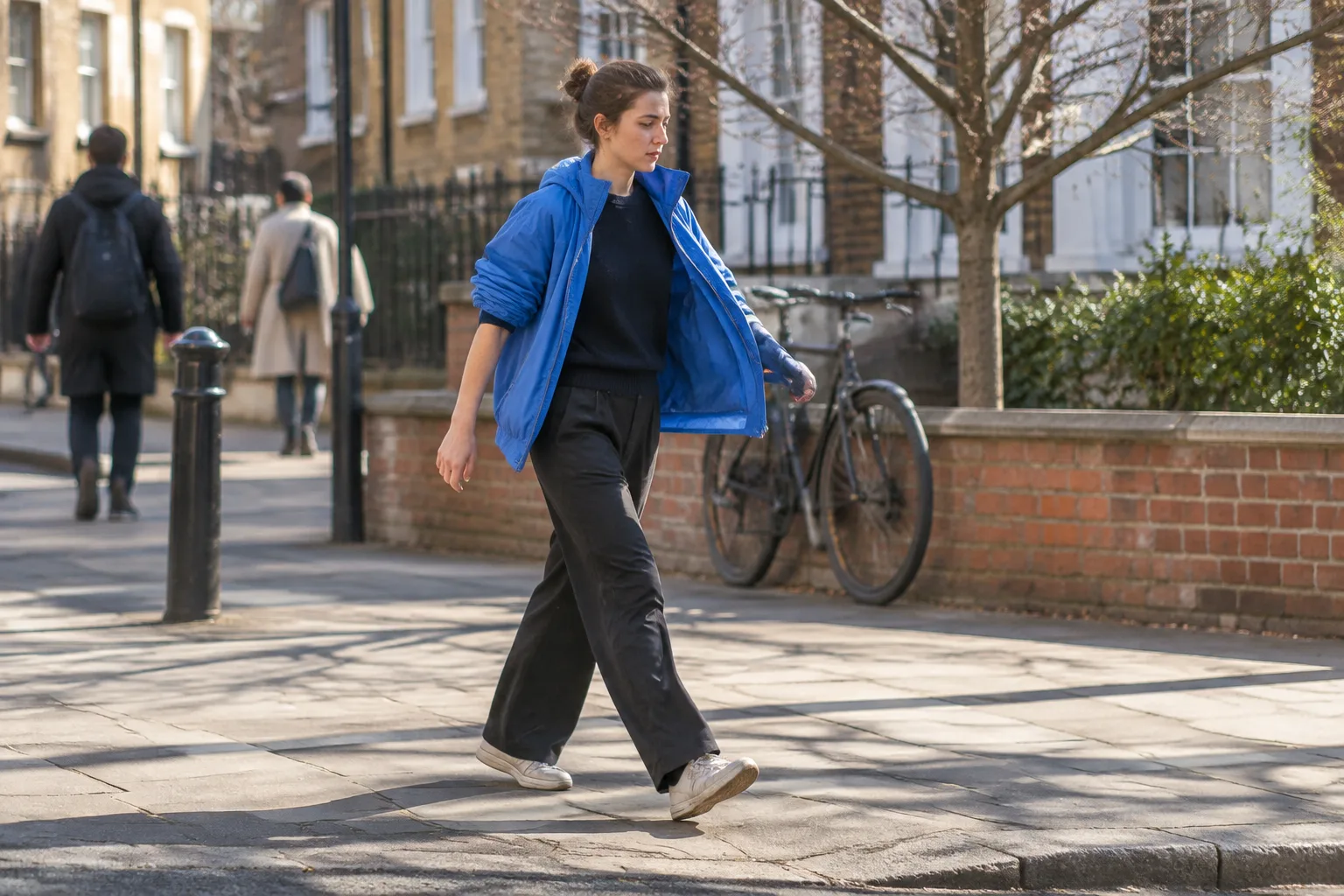
The light jackets that get worn most are the ones that sit quietly in the middle: a plain bomber, a simple anorak, a thin chore coat, a clean softshell with no visible branding. They handle the wavering day without announcing that they were designed for it.
A jacket that ends the day draped over a chair, still useful and still presentable, has done its job. One that ends up balled in a bag because it was too hot, too cold, or too ugly has failed, no matter what the tag promised.