

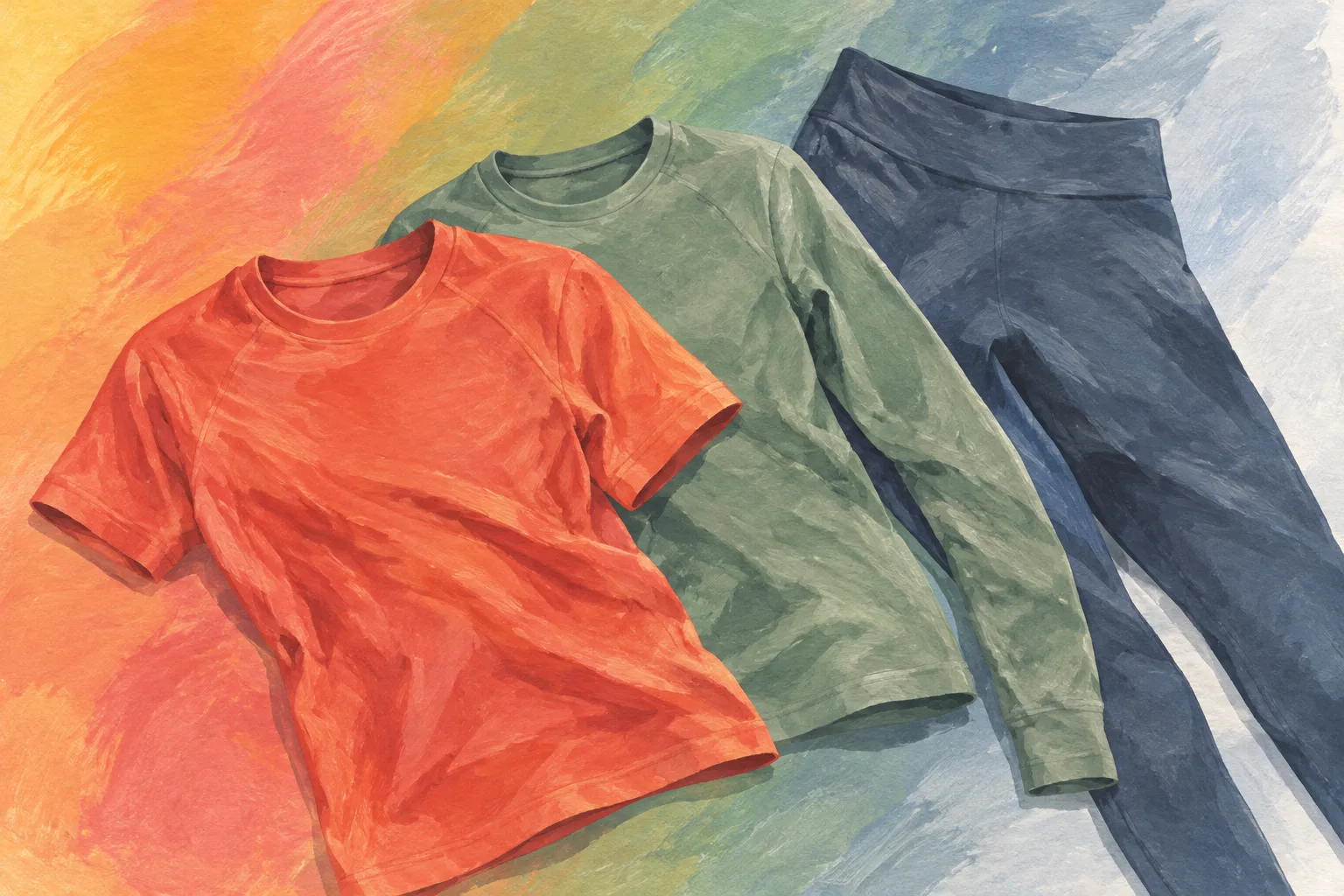
From Heat to Chill: Moving Your Activewear Through the Year
Activewear has a calendar problem. A drawer of leggings and moisture-wicking tops gets bought for one season and then quietly fails in the next. The fabric that felt like a second skin in July turns clammy and cold by October. The snug layer that worked under a jacket in February becomes a heat trap by May. Somewhere in the closet is a running top that has only ever been worn between Memorial Day and Labor Day, and a pair of tights that never leaves the house until the first frost.
This is not a story about buying more gear. It is about the same gear surviving a year. Most wardrobes are built for a single climate band and then blamed for the weather. The fix is mostly about layering, fabric choice, and a willingness to treat activewear as a system rather than a costume.
Why summer fabric fails in cold air
The core of most warm-weather activewear is a thin synthetic knit engineered to move sweat away from skin and let it evaporate fast. That works beautifully at 85 degrees. At 45 degrees, the same fabric pulls heat off the body at a rate the wearer can feel within minutes of stopping. A long-sleeve training top that reads as breathable in August reads as a wet sheet in November.
The mistake is assuming the fabric is at fault. It is doing exactly what it was built to do. The problem is context: a cooling mechanism with no insulating layer over it. Thin summer knits have their place in winter, but only as a base under something else.
The three-layer rule, applied to a gym bag
Outdoor clothing has used a three-layer system for decades: a base that manages moisture, a middle that traps warmth, and a shell that blocks wind and rain. Activewear for the transitional months borrows from that logic without needing to look like mountaineering gear.
The base layer stays thin and fitted. The middle is where the season lives: a light fleece, a merino blend, a quarter-zip. The shell is a packable windbreaker that lives in the bottom of the bag from October through April. Three pieces, worn in different combinations, cover roughly eight months of the year. Two of them likely already exist in the drawer.
The system matters more than any single garment. A person who owns one excellent jacket and three mediocre layers will be colder than someone with three ordinary layers and no jacket at all.
Cotton's bad reputation is partly earned
The old warning about cotton holds in cold, wet conditions: it soaks up sweat and holds it against the skin, and a damp cotton shirt in 40-degree air chills fast. But the blanket dismissal of cotton in all activewear is too broad. A heavyweight cotton blend works fine for a dry, mild autumn walk or a gym session that ends indoors. The fabric to avoid in cold weather is thin cotton next to skin during sweaty outdoor effort. Thick cotton worn as a middle layer over a synthetic base is a different proposition entirely.
Merino wool deserves more attention than it usually gets. It regulates temperature across a wider range than most synthetics, resists odor for days, and stays warm when slightly damp. The catch is durability and price. A merino base layer is a genuine investment piece, and it will pill if treated like a cheap gym shirt.
What changes when the temperature drops below freezing
Below about 30 degrees, the layering math shifts. The base gets thicker or moves to a heavier weight. The middle becomes a real insulating layer rather than a token one. Extremities get attention: gloves, a hat, sometimes a neck gaiter. Activewear brands tend to market these as accessories, which undersells them. Cold hands end outdoor sessions earlier than cold legs do.
There is also a fit question that gets ignored. Winter layers need room to trap air, which means the outer layer should not compress the middle one flat. A snug summer top worn under a tight fleece under a fitted jacket creates three thin sheets with no loft. Sizing up the outer layer by one is often the difference between warm and merely covered.
The spring transition nobody plans for
Most wardrobes are planned for the extremes and improvise through the middle. April and October are the hard months: mornings near 40, afternoons near 65, and a workout that starts cold and ends hot. The temptation is to dress for the finish line and freeze at the start, or dress for the start and overheat by the second mile.
The practical answer is removable layers and a place to stash them. A light vest over a long-sleeve top gives a core-warmth option that can be tied around the waist or stuffed in a pocket. Arm sleeves, which look faintly ridiculous to anyone who has not tried them, solve the same problem more elegantly: pull them down when the body warms up, pull them back on during the cooldown.
Care routines that stretch a wardrobe across seasons
Technical fabrics degrade faster than people expect, and most of the damage happens in the wash. Heat is the enemy: hot water and a hot dryer break down the elasticity in stretch knits and destroy the water-repellent finish on shells. Cold water, a gentle detergent, and air drying keep a midlayer usable for years rather than months.
Merino needs its own rules. Wash it less often than synthetics, use a wool-specific detergent, and lay it flat to dry. A merino base layer treated this way can outlast three cheap synthetic tops, which changes the cost calculation considerably.
There is also a storage habit worth adopting: keep the cold-weather layers in a separate bin or drawer, and rotate them out when the season turns. Activewear that lives crammed in the same drawer year-round gets forgotten, and forgotten gear gets replaced unnecessarily.
Dark colors and the visibility trade-off
Winter activewear skews dark, for reasons that are mostly practical: dark fabrics hide sweat, road grime, and the salt stains that show up on anything worn outdoors in cold weather. The trade-off is visibility. A black jacket and black tights on a grey January evening at 5 p.m. are nearly invisible to drivers.
Reflective trim helps, but a single stripe on a sleeve does less than most people assume. A brighter outer layer, or a high-visibility vest worn over the dark layers, solves the problem without giving up the practical benefits of dark base pieces. The visibility layer is the one place where being loud is genuinely useful.
Building a year-round rotation from what is already owned
The inventory exercise is simple. Pull everything out and sort it by weight and fabric: thin summer knits, midweight pieces, insulating layers, shells. Most people find they own too many of the first category and too few of the middle two. The gaps are usually a light fleece, a packable shell, and a decent pair of gloves.
Filling those three gaps does more for year-round comfort than replacing the entire summer drawer. It also changes how the summer pieces get used. The thin tops stop being seasonal and become a base layer under everything else, which is exactly what they were always good at.
Activewear is one of the few categories where the same garment can genuinely work in January and July, provided it is worn in the right company. The drawer does not need to be twice as large. It needs a middle.