

Compression, Casually: Style Traps to Sidestep
Compression wear has a marketing problem, and it has nothing to do with the garments themselves. The category gets sold as a performance upgrade, a recovery tool, a way to train smarter and bounce back faster, and somewhere in that pitch the basic question of how the things should actually fit gets buried under a pile of claims about blood flow and lactic acid. The result is a closet full of pieces that were bought with high expectations and worn twice, because they pinched at the knee, rolled at the waistband, or turned out to be a size that made the wearer feel like a sausage casing.
The traps are predictable once a person knows where to look. They tend to cluster around three things: the wrong size chosen for the wrong reason, the wrong garment chosen for the wrong activity, and the slow accumulation of wear that turns a snug fit into a loose one without anyone noticing. Each has its own texture, its own moment of realization. None of them are solved by buying a more expensive pair.
The sizing trap that starts in the fitting room mirror
Compression sizing is not vanity sizing, and that is the first thing that trips people up. A medium in a running tight is not a medium in a pair of jeans, and a medium in one brand's calf sleeve can sit two centimeters tighter than a medium in another's. The numbers on the tag are almost a suggestion. What matters is the circumference of the limb the garment is supposed to hug, measured at the right spot, ideally with a soft tape and a straight face.
Most people skip the tape. They hold the garment up, eyeball it, maybe stretch the waistband once, and decide. The problem with eyeballing compression is that the fabric is designed to lie to the hand. It feels generous when relaxed and turns unforgiving once it is on. A pair of socks that looks roomy in the package can leave deep ridges around the ankle after forty minutes.
The specific failure mode here is buying up a size to avoid discomfort. It seems sensible. The sizing chart says medium, the medium feels tight in the store, so the large goes home instead. Two weeks later the garment has lost the very quality that made it worth buying: it no longer compresses. It just fits, like any other piece of clothing, and the wearer is left wondering why the expensive socks feel like ordinary socks.
The honest rule is to trust the tape over the mirror and to accept that the first minute of wear should feel snug to the point of mild annoyance. Compression that feels comfortable immediately is usually compression that is not compressing. The discomfort settles after a few minutes of movement as the fabric warms and the body adjusts. What should not settle is the fit itself. If the garment starts to slide or bunch, it was the wrong size, not the wrong activity.
When the garment is built for a different body of work
The second trap is subtler and more expensive. Compression garments are engineered for specific demands: running tights are cut for a stride, cycling bibs are cut for a seated position, recovery sleeves are cut for a limb at rest. A person who buys a cycling short for the gym and wonders why the chamois feels like a folded towel under a squat has not bought a bad short. They have bought a short for a body doing something else.
This is where the marketing copy does the most damage. Every garment claims to be versatile, and most are not. A compression top designed to hold the shoulders in a rowing stroke will pull across the chest during a run. A calf sleeve built for post-run recovery will not stay put through a set of box jumps. The fabric paneling, the seam placement, the amount of stretch in the weave, all of it is tuned to a particular movement pattern.
The practical test before buying is to picture the specific activity and then check the seams. If the seams sit where the activity bends, the garment will rub. If the paneling is asymmetric for one sport, it will feel wrong in another. The label rarely says this out loud, but the construction does. A garment built for running has flatlock seams at the inner thigh. A garment built for recovery has softer, wider seams because it expects no friction at all.
The slow death of stretch that nobody logs
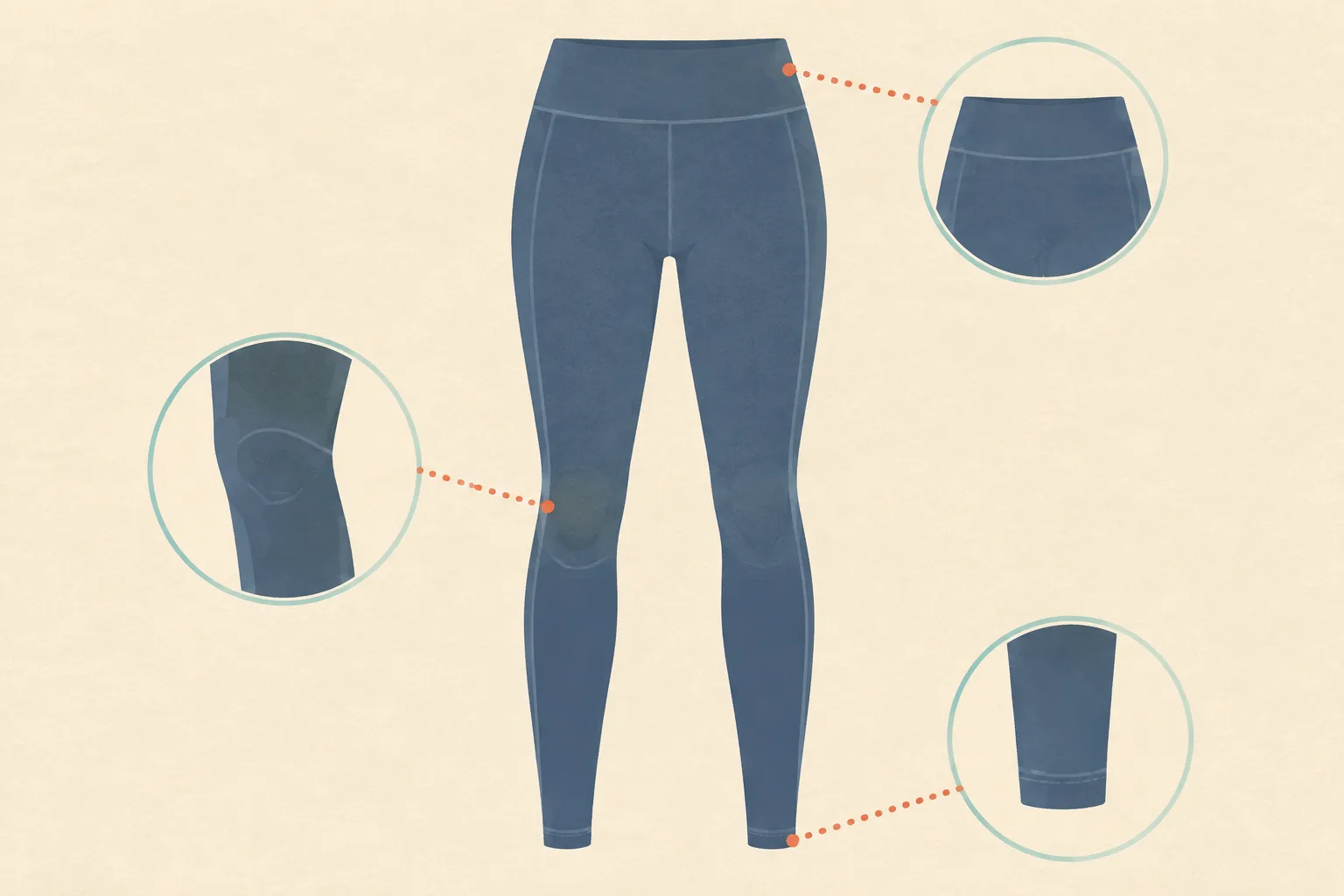
Compression fabric has a lifespan, and it is shorter than most people assume. The elastane in the weave degrades with every wash, every dry cycle, every stretch and release. A pair of compression tights that fit perfectly in March can be genuinely loose by September, and the change happens so gradually that the wearer adjusts without noticing. The waistband that used to hold now rolls. The knee that used to stay put now bags. The garment still looks fine on the hanger, which is the cruelest part.
The trap is treating compression wear like regular clothing, which means washing it hot, drying it on high, and keeping it until it falls apart. Heat is the enemy of stretch. A single pass through a hot dryer can do more damage than a dozen workouts. The fabric does not tear or pill in any obvious way. It simply stops returning to its original shape, and the compression quietly becomes a suggestion.
The fix is unglamorous: cold wash, hang dry, and replace on a schedule rather than waiting for visible failure. For a piece worn three or four times a week, six to nine months is a reasonable working life before the elastic memory starts to go. Most people keep theirs for years and wonder why the magic faded. The magic was never magic. It was a specific fabric under tension, and the tension has a clock.
Layering compression over compression
There is a particular habit, common among people who have bought into the category wholesale, of wearing compression under compression: a calf sleeve under a full tight, a compression short under a compression legging. The logic feels sound, more support in more places. In practice, the layers fight each other. The inner garment bunches where the outer one grips. The seams stack and create pressure points that the wearer only notices an hour in, usually when it is too late to change.
The other cost is heat. Compression fabric is dense by design, and doubling it traps warmth in a way that turns a cold-weather run into a sauna and a warm-weather run into something worse. The body's cooling is already compromised by the tight fit. Adding a second layer over the same patch of skin removes the last bit of airflow the fabric was allowing.
One layer per zone is the cleaner rule. If the calf needs support, the calf sleeve does the job. If the whole leg needs support, the full tight does it. Stacking the two does not double the benefit. It doubles the friction and halves the comfort, and the wearer usually blames the garment rather than the layering.
The waistband that rolls and the wearer who ignores it
Rolling waistbands are the most common complaint in compression wear and the most misdiagnosed. The instinct is to blame the garment, to assume the elastic is cheap or the cut is wrong. Sometimes that is true. More often the waistband rolls because the rise is wrong for the wearer's torso, or because the garment is being worn higher or lower than it was designed to sit.
A high-rise compression tight worn pulled up to the ribs will roll at the top because the fabric is being asked to hold a shape it was not cut for. A low-rise tight hiked up to the navel will do the same. The fix is not a tighter waistband or a different brand. It is finding the rise that matches the body and letting the garment sit where its construction expects to sit.
The trap is tolerating the roll. A rolling waistband is not a minor annoyance. It creates a concentrated band of pressure that digs in with every step, and over a long run or ride it can leave a mark that lasts for hours. The wearer who keeps pulling the band down mid-stride is fighting the garment, and the garment is winning. That is a fit problem, and it is worth returning the piece rather than living with it.
The recovery tight worn as everyday wear
Recovery compression is built for a body at rest, and it is genuinely good at that job. The problem comes when the same piece gets worn for a commute, a grocery run, a full day at a desk. Recovery garments are cut with more compression and less articulation than training pieces, because they assume the limb is not moving much. Put them through a day of stairs and sitting and standing and the fabric starts to migrate, the seams start to press, and the wearer starts to notice the garment in a way that defeats the purpose.
There is also a social cost that nobody warns about. Recovery tights are often cut high and tight, and they read as athletic wear in a way that is fine at home and awkward at a casual dinner. The wearer who tries to style them as everyday leggings usually ends up tugging at the waistband and wishing for pockets. The garment is doing exactly what it was designed to do. It was just designed for a couch, not a conference room.
The cleaner separation is to keep recovery pieces for recovery and training pieces for training. The wardrobe gets a little larger, but each garment stays in the context where its construction makes sense, and the wearer stops asking one piece to do two incompatible jobs.
The compression sock bought one size too small
Socks are where the sizing trap gets most expensive, because the failure is invisible until it is not. A compression sock that is a size too small feels tight in a way that reads as effective. The wearer puts it on, feels the squeeze, and assumes this is what compression is supposed to feel like. Twenty minutes later the toes are cold and the ankle has a deep groove, and the sock is doing more harm than good.
The toe box is the tell. A correctly sized compression sock leaves the toes flat and warm, with the compression concentrated in the calf and ankle. A sock that is too small curls the toes or leaves them numb, and that numbness is a signal the fabric is restricting circulation rather than supporting it. The difference between therapeutic compression and a tourniquet is a centimeter of circumference and a few minutes of attention.
Measuring the calf at its widest point and the ankle at its narrowest, then matching both numbers to the chart, is the only reliable method. Buying by shoe size alone is how people end up with socks that fit the foot and strangle the calf, or the reverse. The chart exists for a reason, and the reason is that the calf and the foot are not proportional across the population.
The piece that gets worn past its tension
There is a moment, usually somewhere in the second season of ownership, when a compression garment stops compressing and starts merely fitting. It is not dramatic. The tights still go on, the socks still stay up, the sleeves still cover the calf. But the squeeze is gone, and the wearer keeps wearing them anyway because they were expensive and they still look fine.
That is the quiet trap at the end of the whole category. Compression is a function of tension, and tension has a shelf life measured in washes and wear cycles. A garment kept past that life is not a compression garment anymore. It is a tight piece of clothing, and the wearer is paying for a benefit that left months ago. The honest move is to retire it, or to demote it to the drawer for yard work and painting, and to buy the replacement before the season starts rather than after the first run where the calf sleeve slides down to the ankle.