

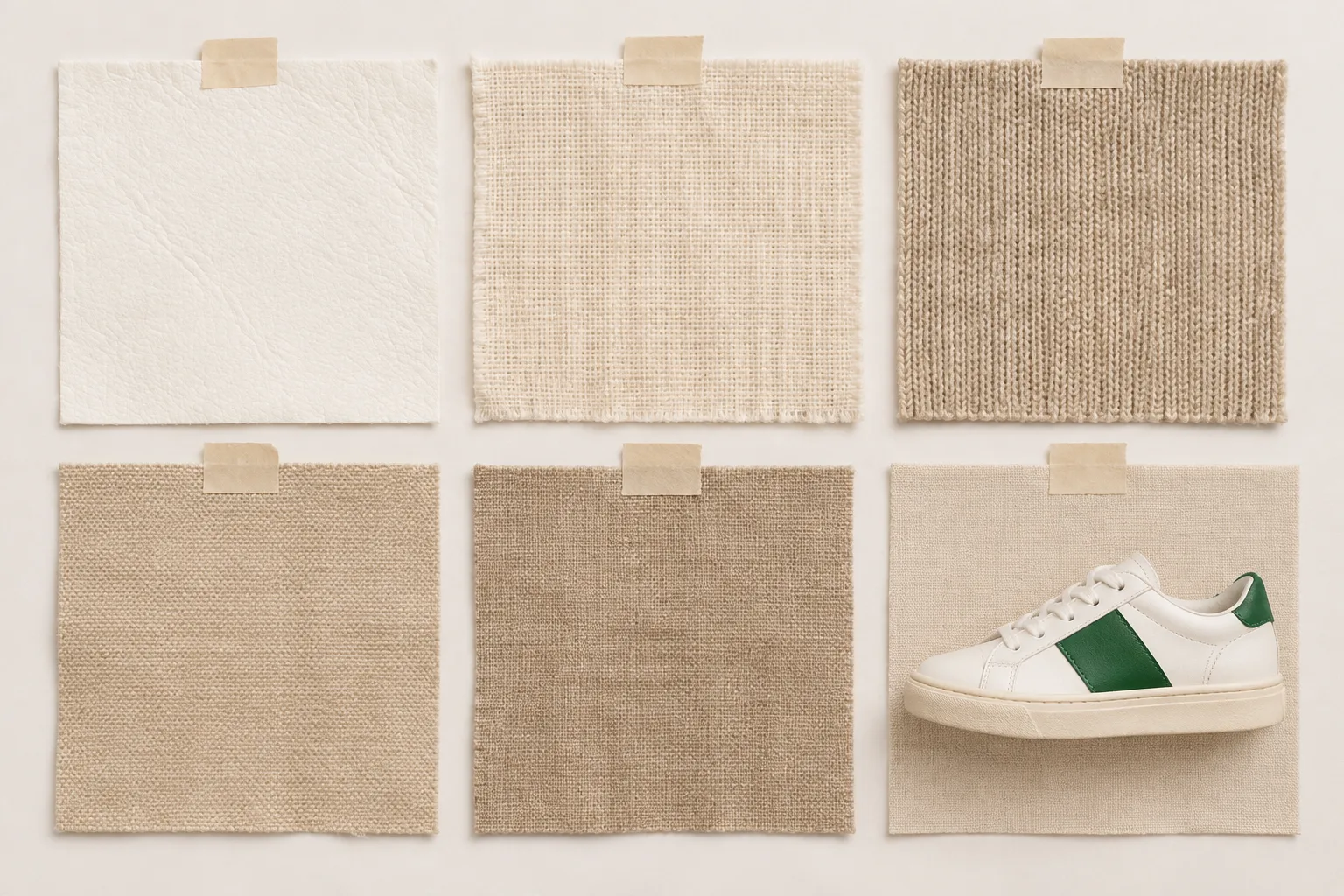
Color Logic: Matching Sneakers to the Rest of Your Outfit
White sneakers go with everything. That claim has sold a great many pairs of shoes and ruined a great many outfits. A white sneaker and a cream linen trouser and an oatmeal sweater can read as three beige-ish objects arguing quietly in a hallway, each one insisting it belongs to a different family. The shoe is white, the trouser is off-white, the sweater is taupe, and the whole thing looks like a load of laundry someone forgot to sort. Color matching sneakers to clothing is a real craft, and it starts with admitting the obvious: shoes are the hardest working color in the outfit, because they sit at the bottom of the frame and anchor everything above them.
The eye reads a silhouette from the ground up. Feet, ankle, hem, waist, shoulders, head. Whatever color sits at the base sets the register for the rest. A black sneaker under a pale summer outfit creates a visual full stop at the floor; the gaze lands there and stays. A sneaker close in tone to the trouser lets the eye travel upward without a jolt. That single mechanical fact explains more about successful sneaker styling than any seasonal trend report.
The trouser hem sets the rule
Look at the inch of fabric closest to the shoe. That is the reference color. A sneaker matched to the trouser hem produces a long, uninterrupted line from the floor to the knee, and the leg reads taller. This works for charcoal wool trousers with a charcoal or near-black sneaker, for olive chinos with an olive-toned canvas shoe, for navy with navy. It is the oldest trick in menswear and it still works because it flatters the body rather than the trend calendar.
Contrast at the hem does something else entirely. A stark white sneaker under a dark trouser creates a deliberate break, like a hard return in a paragraph. That break can look crisp and modern on a slim trouser with a clean hem. It can also chop a short leg into two shorter legs. The difference between those two outcomes is usually the width of the trouser and the height of the wearer, which is why the same white sneaker and black trouser pairing looks effortless on one person and awkward on another.
When the shoe should echo the top half
Matching the hem is the default, not the only move. The other reliable strategy is to let the sneaker pick up a color from above the waist: a rust suede sneaker under a rust overshirt, a forest green canvas shoe with a green knit cap or a green field jacket. This creates a triangle of color with the point at the floor and the base at the shoulders, and the outfit becomes visibly intentional even to people who could not name what changed.
This strategy has a limit. The echo needs to be close in hue and value. A mustard sneaker and a lemon shirt are not the same family; they are two strangers wearing similar name tags. Rust and burnt orange read as related. Cobalt and sky blue read as related. Pale pink and oxblood do not, no matter how confidently a stylist says they do.
The neutral sneaker is not actually neutral
Grey is the most overrated sneaker color in the business. A mid-grey suede sneaker is supposed to be the safe choice, and instead it lands in a dead zone: too dark to read as light, too light to read as dark, and cold in a way that fights warm trousers. Grey sneakers work best with grey trousers and grey knitwear, a tonal look that is deliberate and slightly severe. Dropped into a warm outfit of camel, cream, and brown, a cool grey shoe looks like a guest who arrived at the wrong party.
True neutrals in footwear are rarer than the marketing suggests. Black, white, and the various browns from tan through chocolate are the reliable ones, and each carries a temperature. Black reads formal and sharp. White reads clean and casual. Brown reads warm and earthy and picks up leather belts, watch straps, and bag straps without effort. A person building a small sneaker rotation should think in these three temperatures first and colors second.
Toe caps and soles change the math
A sneaker is not one color. It is a toe box, a mid-panel, a heel counter, a sole, and a set of laces, and each of those surfaces can carry a different tone. A gum sole warms up a white leather upper and makes it sit more easily beside tan and olive. A black sole under a black upper creates a single dark mass at the foot, which is why all-black sneakers look heavier and more formal than the same silhouette in white. A contrast heel tab in red or green is a small thing that can either tie into the rest of the outfit or sit there like a stray comma.
The laces deserve a mention because so many people ignore them. Swapping white laces for cream or tan on a white sneaker softens the contrast against warm trousers. Swapping them for black sharpens it. This is a five-dollar adjustment that changes the read of the whole shoe, and it is the kind of small decision that separates an outfit that works from one that merely follows rules.
Sock color as the invisible bridge
The sock is the mediator between trouser and sneaker, and it gets almost no attention. A charcoal trouser over a white sneaker with a white sock produces a clean, sporty line. The same trouser over the same sneaker with a charcoal sock reads dressier and more continuous. A cream sock under a navy trouser and a tan sneaker bridges two warm-to-cool tones and makes the transition feel planned.
Visible socks in a bright color, worn with a cropped trouser and a low sneaker, are a deliberate stylistic choice and belong to a specific look. That look has rules of its own: the sock color usually echoes something above, and the trouser is usually short enough to show a clean band of it. Shoved under a full-length trouser, a bright sock peeking out at the ankle looks like a mistake rather than a decision.
Black sneakers under light trousers
This is the pairing that generates the most disagreement, and the disagreement is usually about proportion rather than color. A black sneaker under a stone or ecru trouser creates a hard visual anchor at the floor. On a tall person with a straight-leg trouser, that anchor looks intentional and slightly European. On a shorter person with a tapered trouser, the same shoe can make the leg look truncated, because the eye stops at the ankle instead of traveling up.
The fix is rarely to change the shoe. It is to change the trouser: a wider leg, a slightly longer hem, a break that softens the line. Color logic and fit logic are the same conversation, and treating them separately is how outfits end up technically correct and visibly wrong.
One loud shoe, one quiet outfit
A colored sneaker, whether a red canvas low-top or a green suede runner, needs a quiet field around it. The rest of the outfit should be built from a narrow palette, ideally two or three tones drawn from the shoe's own family or from true neutrals. A red sneaker with grey trousers and a white shirt works because the shoe is the only saturated object in the frame. A red sneaker with a blue shirt, olive jacket, and patterned scarf is a traffic jam.
The practical test is to squint at the outfit. If the shoe is the only thing that jumps, the balance is right. If two or three things jump, the shoe is competing and will lose.
The belt and the shoe do not need to match
An old rule says the belt and shoes should match. Applied to sneakers, the rule breaks down immediately, because a canvas sneaker has no leather to match. What actually matters is temperature and formality, not literal color. A brown leather belt and a tan suede sneaker share a warm family and sit at a similar level of casualness. A black belt and a white sneaker share nothing, and that mismatch is fine as long as the outfit is clearly casual and the belt is not the loudest object in the frame.
The better question is whether the shoe agrees with the register of the rest of the outfit. A technical running shoe with a tailored wool trouser is a register collision, no matter how well the colors line up. A clean leather sneaker with the same trouser is a register match. Color can only do so much work when the formality levels are fighting.
Season shifts the whole palette
Winter outfits run dark and heavy, and a bright white sneaker under a black overcoat and charcoal trousers reads as a deliberate flash of light at the bottom of a dark column. That can be striking. It can also look like the wearer forgot to change shoes. A cream or off-white sneaker, slightly warmer and slightly dirtier, sits more comfortably under winter wool. The same cream sneaker under a pale summer linen outfit can look muddy, which is why summer tends to reward a cleaner, brighter white.
This is the seasonal version of the temperature rule, and it explains why a person's best sneaker in February is often their worst sneaker in July. The shoe did not change. The light and the surrounding fabric did.
A short list of pairings that hold up
Navy chinos, a white oxford shirt, and a tan suede sneaker. Charcoal wool trousers, a grey crewneck, and a black leather sneaker. Olive fatigues, a cream sweatshirt, and an off-white canvas low-top. Stone chinos, a navy polo, and a brown gum-soled sneaker. Indigo denim, a grey tee, and a white sneaker with cream laces. Each of these works because the shoe either continues the trouser or echoes a color from above, and because all the pieces sit at the same level of casualness.
None of them require a rare shoe or a designer budget. They require looking at the bottom inch of the trouser and the top half of the outfit before walking out the door, and then making one decision instead of three.
The scuff is part of the color
A pristine white sneaker is a different color from a broken-in one. The scuffs, the creasing at the toe, the slightly grey sole, the faded laces: these push a white sneaker toward cream and grey and make it easier to wear with warm, lived-in clothes. A person who keeps one pair of white sneakers box-fresh and another pair beaten up has effectively doubled their footwear palette without buying anything new.
The pair that gets worn to a muddy field on Saturday and the pair that gets worn to a dinner on Friday are not interchangeable, even if they started identical. Color logic extends to condition. A clean shoe under a rumpled outfit looks borrowed; a scuffed shoe under a crisp outfit looks careless. The match is between the shoe and the life happening above it, and that is the whole of the craft.