
Choosing a Sporty Bag That Works All Day
A sporty bag has one job that most bags fail: it has to survive the whole day, from the 7 a.m. train to the 9 p.m. walk home, without looking like it gave up halfway through. The category is crowded with bags that photograph well on a hiking trail and then betray their owner at the office. The trick is finding one that carries a laptop, a change of clothes, and a water bottle while still reading as intentional rather than borrowed from a gym locker.
What separates a bag that works all day from one that only works for an hour is a short list of physical traits: how the straps distribute weight, how the fabric handles rain and abrasion, how the opening closes, and whether the silhouette holds its shape when the bag is half empty. Get those four right and the rest is taste. Get them wrong and no amount of clever pocketing will save the commute.
The Shoulder Strap Is the Whole Bag
A bag is only as good as the two inches of webbing that touch a person's shoulder. A poorly padded strap on a loaded bag turns a twenty-minute walk into a slow argument with gravity. The strap should be wide enough to spread pressure across the collarbone, not so wide that it looks like a seatbelt, and it should be adjustable enough that the bag sits high on the back rather than slapping the lower spine with every step.
The single most underrated feature is a sternum strap. On a bike, that little clip stops the bag from swinging out on turns. On foot, it keeps the load from shifting when the wearer leans forward to check a phone or reach a turnstile. Bags that omit it tend to be designed for the mirror, not the street. A sternum strap is cheap to add and almost impossible to retrofit cleanly, so it is worth checking before purchase.
Crossbody carry gets overlooked in sporty bags, but a bag that can be slung across the chest and worn at the front solves the pickpocket problem on crowded transit and keeps the contents accessible without taking the bag off. The strap hardware should allow that mode without twisting. A swivel clip at the top of the strap is the quiet hero here.
Fabric That Handles a Real Commute
The standard sporty bag fabric is a coated nylon or polyester, usually in the 400 to 900 denier range. Denier is a measure of thread thickness, and higher numbers mean a heavier, more abrasion-resistant weave. A 400-denier bag feels light and packable; a 900-denier bag feels like it could be dragged across concrete. For a daily carry that sees a train seat, a café floor, and the occasional rain shower, something in the middle, around 600 denier, hits the balance between durability and weight.
Water resistance matters more than waterproofing. A fully waterproof bag with taped seams is stiff and expensive, and most commuters never need it. A bag with a durable water repellent finish and a coated backside will shed a drizzle and survive a downpour long enough to reach shelter. The zippers are the weak point in any bag, and a water-resistant zipper with a small flap over it costs little and saves a laptop from a wet morning.
Texture is where sporty bags distinguish themselves from office bags. A ripstop grid, those faint squares woven into the fabric, signals outdoor intent and also prevents small tears from spreading. A smooth ballistic nylon reads more urban. Neither is better, but the choice should match the rest of the wardrobe. A ripstop bag worn with a wool coat looks like a deliberate contrast. A smooth nylon bag worn with the same coat looks like a forgotten briefcase.
The Opening Decides How the Bag Feels
Most sporty bags use one of three openings: a top zipper, a flap with a buckle, or a roll top. Each changes the daily experience more than the fabric does.
A top zipper is the fastest and the most familiar. It opens wide, lets a hand reach in without looking, and closes in one motion. The tradeoff is that a long zipper is a long failure point, and a bag that is overstuffed can strain the teeth. A good top-zipper bag uses a chunky coil zipper with a metal pull, not a delicate invisible zip borrowed from a dress.
A flap bag with a buckle or a magnetic clasp looks more considered and sheds rain better, because the flap covers the opening. It is slower to open, which matters at a ticket gate or a checkout counter. The best flap bags use a magnetic closure under the buckle so the flap can be lifted one-handed and dropped back into place without fumbling.
A roll top is the most weatherproof and the most adjustable: the bag shrinks when half empty and expands when full. It is also the slowest to open, and on a crowded train, a roll top that requires two hands and a moment of balance is a genuine annoyance. Roll tops suit cyclists and weekenders more than commuters who need to reach a transit card every ten minutes.
Structure Holds the Silhouette When Empty
A sporty bag that collapses into a deflated lump when its laptop is removed looks cheap, no matter what it cost. Structure comes from three places: a padded back panel, a stiffened base, and a lining that does not sag. The back panel is the most important. A firm foam panel keeps the bag upright against the spine and stops the bottom from ballooning outward when the bag is set down.
The base deserves special attention. A bag that is set down on a wet platform, a dirty floor, or a gravel path takes abuse on its bottom edge. A reinforced base panel, ideally in a darker or tougher material than the body, extends the bag's life and keeps it standing when placed on the ground. Bags without a stiffened base tend to slump forward and spill their contents when opened.
Internal organization should be minimal and removable. A sporty bag with a dozen tiny elastic loops and mesh pockets looks capable but becomes a trap for receipts and loose change. Two or three well-placed pockets, a padded laptop sleeve, and a key leash cover almost every daily need. Anything more is decoration that adds weight and hides crumbs.
The Laptop Sleeve and the Lunch Problem
A 13-inch laptop and a 16-inch laptop are different animals in a bag. The sleeve should be padded on the bottom and the back, not just the sides, because the most common damage happens when a bag is set down harder than expected. A false bottom, a strip of foam or fabric that lifts the laptop a centimeter off the bag's base, is the mark of a bag designed by someone who has actually carried one.
Then there is the lunch problem. A sporty bag that shares space between a laptop and a Tupperware container is one spill away from a very bad afternoon. The solution is a separate compartment or a small insulated pouch, not a shared main cavity. Bags with a front pocket large enough for a sandwich and a water bottle, sealed off from the laptop sleeve, are worth their weight in saved keyboards.
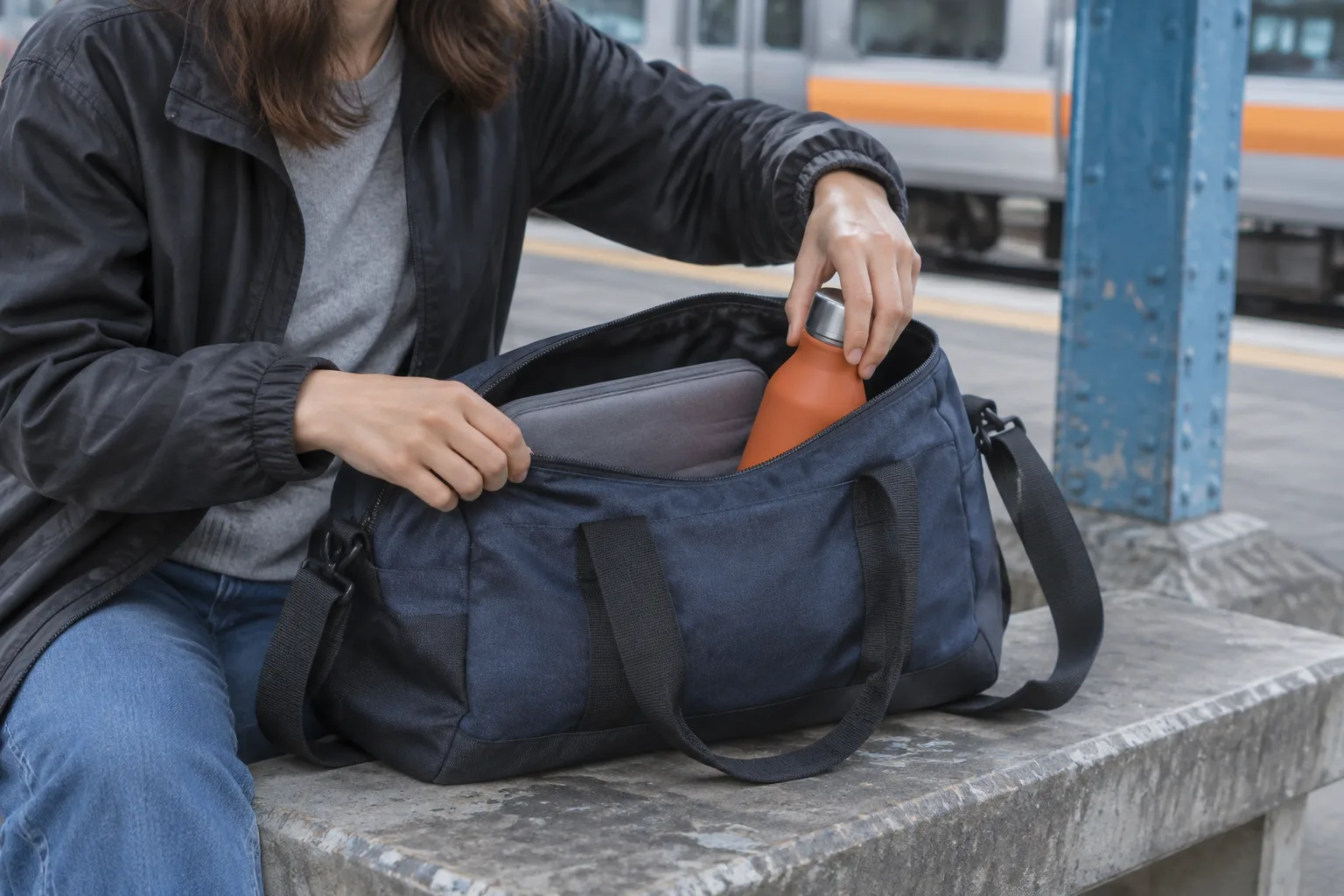
A water bottle pocket on the outside is non-negotiable for a bag that works all day. An interior bottle sleeve is a compromise that puts condensation next to electronics. An exterior stretch pocket, deep enough to hold a 500 ml bottle securely, keeps the bag's interior dry and the bottle reachable without unzipping anything.
Weight and the Empty-Bag Test
A sporty bag should weigh under a kilogram empty. The temptation with durable fabrics and padded panels is to keep adding reinforcement until the bag weighs two kilos before anything is put inside. That is a bag designed for a catalog photo, not a commute. The empty-bag test is simple: pick it up by one strap and notice whether it feels like a bag or like luggage. If it feels like luggage, it will feel worse at 6 p.m.
Hardware is where weight creeps in. Metal buckles, thick D-rings, and heavy zipper pulls add up. Plastic hardware from a reputable maker is lighter and perfectly strong for a daily carry. The one place to accept metal is the main buckle or the strap adjuster, where a plastic part that fails strands the bag. Everywhere else, lighter is better.
Color and the Office Question
The sporty bag's hardest audience is the office. A neon trail pack reads as a weekend object; a black ballistic nylon tote reads as a work object that happens to be durable. The middle ground is a muted palette: olive, charcoal, sand, navy, or a deep burgundy. These colors hide dirt, match most outerwear, and pass in a meeting without comment.
Bright accents are fine in small doses. A colored zipper pull, a contrast lining, or a reflective strip on the strap adds personality without shouting. Reflective details are also a genuine safety feature on dark winter commutes, and they cost the manufacturer almost nothing. A bag with a reflective tab on the back panel is a bag designed for real evenings, not just product shots.
Logos deserve a mention. A large logo turns a versatile bag into a billboard and dates it. A small woven label or an embossed patch is enough. The best sporty bags let the material and the shape do the talking, which is also why they survive more than one season of fashion.
The Bag That Gets Repaired
The most telling detail about a sporty bag is whether it can be fixed. Zippers fail, straps fray, and buckles crack, and a bag with replaceable hardware and a simple construction can be serviced by a local repair shop for a fraction of its replacement cost. A bag with glued seams and proprietary fittings is a disposable object dressed as a durable one.
Look for standard-width webbing, screw-in or snap-on hardware, and stitching that can be matched. A bag that a cobbler can open, mend, and close is a bag that will outlast three cheaper alternatives. The repair question is also a design question: bags built to be fixed tend to be built more carefully in the first place, because the maker expects someone to look inside.
The final measure of a sporty bag is not how it looks on day one but how it looks on day four hundred, after a winter of salt stains, a summer of sweat, and a hundred trips through a turnstile. A bag that still holds its shape, still closes cleanly, and still sits well on the shoulder has earned its place by the door. That is the bag worth choosing, and it is usually the one with the least to prove.